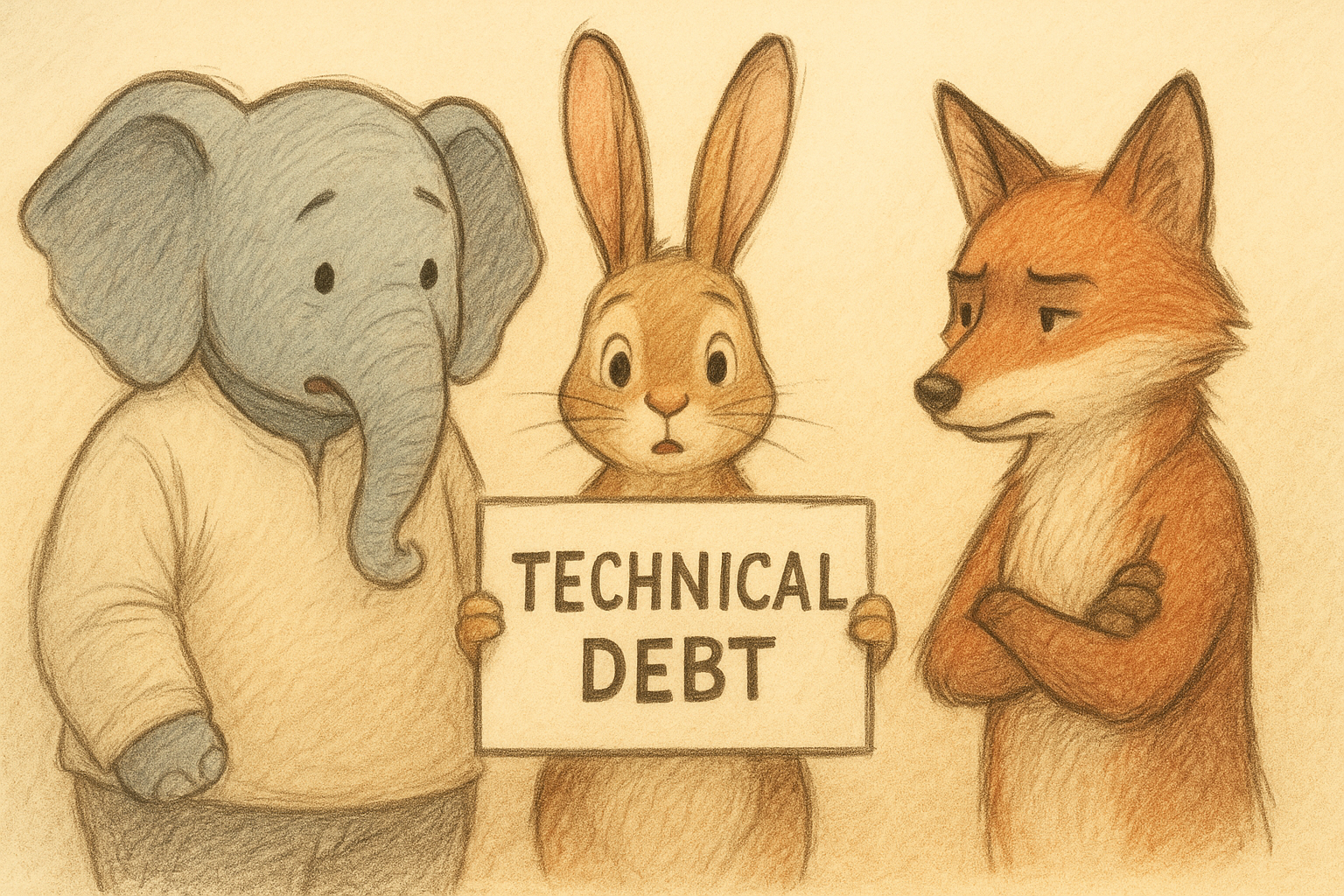
Using Solution Architecture to Manage Technical Debt
What technical debt really means, the difference between intentional and unintentional debt, and how to use solution architecture to keep your tech debt projects scalable, predictable, and strategically aligned.
What Is Technical Debt?
Every software company has technical debt — but not every company manages it. Technical debt occurs when the cost of maintaining and changing a system grows faster than the value that system creates.
When that cost crosses a certain point, the debt becomes toxic. It quietly erodes delivery velocity, profit margin, and innovation capacity.
Two Kinds of Technical Debt
1. Unintentional Technical Debt
This debt creeps in through neglect or lack of knowledge. Think of it as hidden debt you didn’t know you owed.
Common causes:
- Outdated or unmaintained libraries
- Unclear ownership or accountability
- Architectural decisions that no longer align with strategy
It’s dangerous because it compounds silently. Teams slow down, firefighting becomes normal, and refactoring turns into a distant dream.
2. Intentional Technical Debt
This debt is strategic. You knowingly take a shortcut for speed — to test a hypothesis, hit a deadline, or capture market timing.
Examples:
- Shipping an MVP without automated tests
- Hard-coding configuration to move fast
Intentional debt is healthy when it’s documented, time-boxed, and planned for repayment. Otherwise, it turns into the unintentional kind.
The Key Difference: Awareness
The difference between healthy and unhealthy technical debt is awareness. You can’t manage what you don’t see.
That’s why mature teams use Solution Architecture before development — to identify trade-offs upfront, instead of discovering them later.
Why Solution Architecture Prevents Toxic Debt
A repeatable solution architecture process ensures every proposal goes through the same lens:
-
Understanding the business domain and problem. If the problem isn’t clear, the solution can’t be right. Simple as that.
-
Avoiding buzzword architecture. There are great design patterns available which have been established, But these patterns are tools, not the solution. We don’t say we’re going to use serverless and then “figure it out during development.” We need to understand the patterns and plan the architecture for how we’re going to apply the pattern to the problem that we’re trying to solve.
-
Aligning with technology strategy. If your strategy says “cloud native,” but you build “cloud agnostic,” you’ve created strategic technical debt before you’ve even shipped.
-
Defining scope and investment. Scope equals investment. Without clarity, you can’t explain the “why” or measure ROI. This is business justification for why you are implementing the project in the first place.
A good architecture review is less about design and more about business translation — turning technical intent into strategic predictability. And we use templates for this kind of work for repeatability in the process. It’s not about process it’s about saving time. Keep in mind this document will be referenced through development and will be used when writing user stories and tickets, so think of it as up front planning that helps remove uncertainty for the implementation team later.
The Economics of Technical Debt
Technical debt isn’t inherently bad. In fact, it’s a natural byproduct of moving fast and adapting to change. But it becomes dangerous when interest starts compounding faster than your ability to pay it down.
The goal isn’t to eliminate technical debt — it’s to manage it intentionally. Because in the end, technical debt isn’t technical. It’s financial.
I work with SaaS scale-ups and acquirers to:
- Make technology strategies make business sense
- Fix gross margins
- Optimize tech orgs for exit readiness
About the Author
Darcy Reno — executive technology leader, career CTO, exited-founder. 25+ years improving SaaS efficiency and value creation for software scale-ups and portfolio roll-ups. Not afraid to kill bad ideas.
Darcy Reno
Technology executive specializing in scaling vertical market software companies, saas turnarounds, M&A, and post-merger integration. Former EA, Technicolor, Constellation Software.
Get in Touch